Sapphire Class news
Cyanotypes
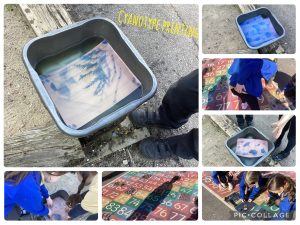
In our English book we are reading a book called The Bluest of Blues which is all about Anna Atkins and her work on cyanotypes to print the natural world. We were really interested to see what happened when you used the sun to create prints of leaves, twigs, flowers and grass. We were each given a sheet of cyanotype paper (which had special chemicals on it) and laid out our collection of leaves etc. on top of the paper. We then left the sheet out in the sunlight for 15-20 minutes. After the time was up, we removed all of the leaves and could see the prints start to appear. We then had to rinse the paper in cold water for the process to be finished. We had varying results as some of did not flatten the leaves enough and some of us forgot to weigh down our leaves so they blew away! We are going to try again soon and hopefully learn from our mistakes.
Nature hunt
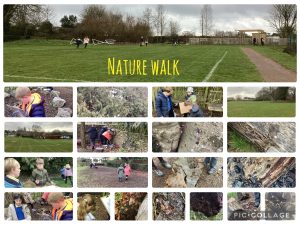
In science, we are learning about our local environment and what lives there. We spent a whole lesson investigating the school grounds. We looked in the nature area and found worms, beetles, spiders, ladybirds and woodlouse hiding in amongst the leaves and logs. We also discovered lots of different leaves at the top of the field as well as lichen and cones. Some of us even found bird poo and we could see that they were eating the berries on the bush as the poo was a purpley colour!
We are now learning about plants and how they adapt to different environments.
Sea ice vs land ice
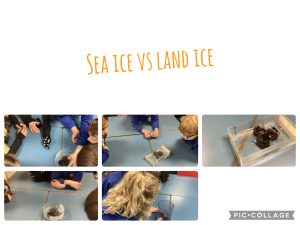
In Geography we have been learning about the impact of climate change. One of the things we looked at is the melting polar caps. We set up an experiment using water, ice cubes, containers and metal weights.
The water represented the sea, the weights represented the land and the ice cubes represented the sea ice in one experiment and land ice in another experiment.
We were looking to see which type of ice caused sea levels to rise and therefore cause flooding.
We set up each experiment and waited for the ice to melt.
Experiment 1 – sea ice. Yes, this ice slowly melted and made the ‘sea levels’ rise slightly, but nothing to worry about.
Experiment 2 – land ice. Yes, this ice also melted and tricked into the ‘sea’ causing the sea levels to rise and start to flood the ‘land’.
What we discovered was that the continuing rising temperature of our planet is causing land ice to melt at such a rate that it is impacting the sea levels and causing flooding.